Reflective Sheeting for Traffic Signs
Application landing page for permanent traffic and street signs: suitable performance grades, substrates, specification checks, and RFQ fields.
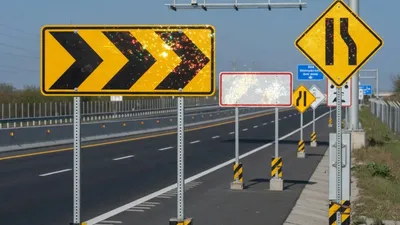
Which reflective sheeting is used on traffic signs?
Permanent traffic and street signs typically specify a performance class (ASTM Type and/or EN RA class), not only a structure name. Many programs land in HIP or microprismatic traffic families; engineer grade appears more often on commercial or lower-demand signage.
Recommended grade path (demo)
| Need | Start with | Then verify |
|---|---|---|
| Standard road / street signs | HIP sheeting | Type III/IV family per SKU TDS |
| Higher-performance permanent signs | Microprismatic traffic | Type IV/VIII/IX/XI per report |
| Long approach / wide geometry | Long-distance films | Type VIII–XI class candidates |
| Daytime conspicuity accents | Fluorescent films | Per-color RA geometry |
Substrate and process notes
- Common substrate: clean, smooth aluminum sign blanks.
- Application temperature and surface prep follow the TDS (demo card fields show where this lives).
- Printing: screen and some UV digital systems are SKU-specific — never promised at category level.
RFQ fields for this application
Agency specification reference, ASTM Type, colors, legend/print process, blank size or roll goods, quantity, destination, and whether a sample panel is required.
Catalog path on this site
Start from the reflective sheeting hub, then pick a grade family. Compare families in engineer grade vs HIP vs higher prismatic. For optics basics see what is retroreflective material?.
Commercial advertising faces (not agency traffic specs) use the advertising and sign shops path instead.
Gallery
Related Reading
guides
Reflective Materials Glossary
Glossary of reflective sheeting and conspicuity tape terms: retroreflection, HIP, DOT-C2, ECE 104, SASO, SOLAS, ASTM types, and Chinese factory wording bridges.
guides
Microprismatic Reflective Sheeting: Structure Grades and Uses
Microprismatic reflective sheeting explained: cube-corner structure vs glass bead which ASTM Types it covers and how to choose among traffic sign grades.
guides
Nikkalite Reflective Sheeting Alternatives
Independent alternatives for Nikkalite reflective sheeting searches: glass-bead and prismatic paths, ASTM Type caution, and non-affiliation disclaimer.
Was this helpful?
Thanks for your feedback.